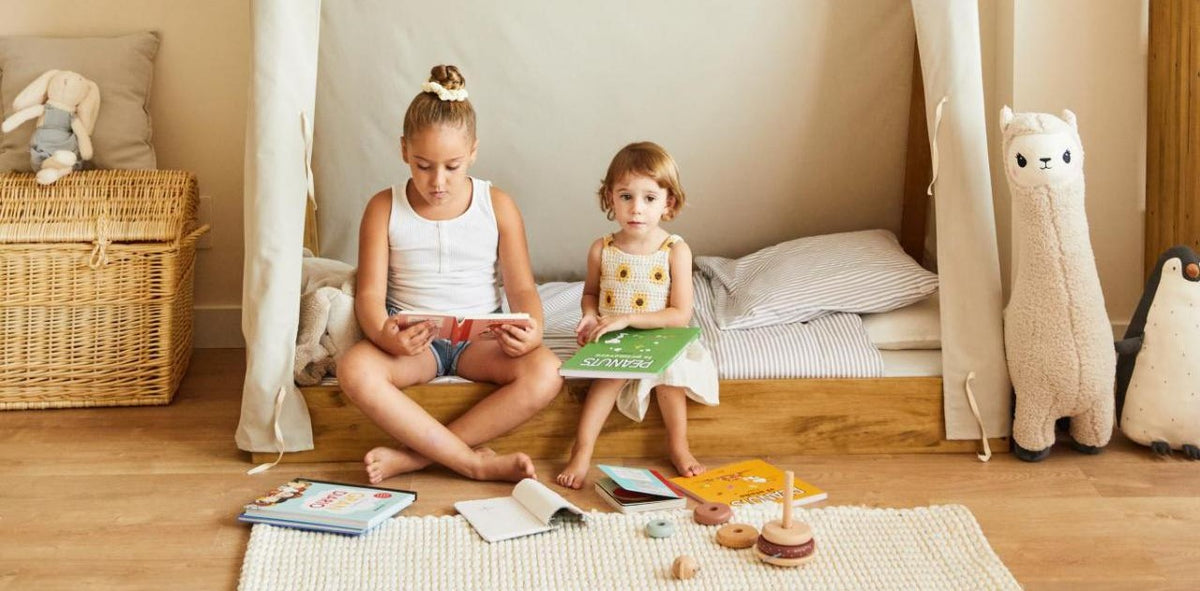
A Montessori bedroom is one designed at the child's height so they can move around, choose and tidy up on their own. It has a low or floor-level bed, shelves and coat racks within reach, just a few toys on display and neatly arranged, natural materials and calm decor. The aim is to encourage independence from the earliest years.
The method, created by the Italian educator Maria Montessori, starts from a simple idea: if the environment is adapted, the child learns by doing things for themselves. That's why furniture matters so much. In our Kids collection you'll find solid wood children's furniture designed with this approach in mind. Below we share the key points for applying it at home.
Montessori principles applied to the bedroom
-
Everything at their height: the child should be able to reach their clothes, books and toys without help.
-
Freedom of movement: clear floor space to play, crawl or move around.
-
Visible order: just a few things, each in its place, so they know where to take things from and where to put them back.
-
Real, natural materials: wood, cotton, wool, wicker. Objects they can touch that teach them what the world is like.
-
A calm atmosphere: soft colours and few stimuli, so they can concentrate.
The zones of a Montessori bedroom
Sleep area
A Montessori bed is low or placed directly on the floor, so the child can get in and out on their own from the time they start crawling. Next to it, a soft rug and, if you like, a lamp with warm light for the bedtime story.
Dressing area
A low wardrobe or clothes rail, with just a few garments on display, lets them choose their clothes and get dressed on their own. A mirror at their height completes this corner and helps them recognise themselves and brush their hair.

Blai Montessori wardrobe

Adel Montessori mirror
Play area
Low shelves with a few toys, organised in trays or baskets, are better than a toy chest where everything gets mixed up. Rotate the toys every few weeks: fewer options at once help concentration.
Activity area
A table and chair sized for them to draw, do puzzles or have a snack. Their feet should rest on the floor and the table should be at elbow height.

Zareth children's table

Zareth children's chair
Reading area
A front-facing bookshelf with the covers on show and a cushion or rug on the floor. Books are easier to choose when they can be seen, and this way children get used to reading independently.
Montessori furniture: what it is and why to choose it
Montessori furniture is child-scale furniture that children can use without help: low wardrobes, open shelving, tables and chairs sized for them, floor-level mirrors or low beds. It's not just about looks: an environment like this helps them gain confidence, tidy up and make small decisions every day.
When choosing it, make sure it's made of solid wood, with rounded edges, stable and with child-safe finishes. Because these are simple, sturdy pieces, many stay useful as the child grows: a low shelf ends up as a bookcase and a small wardrobe later serves for toys or seasonal clothes.
Decor and colours
A Montessori bedroom is calm: walls in soft tones (warm white, sand, sage green), few things hung up and always at their eye level. Prints of animals or nature, a mobile above the play area in the first few months and a plant or two (out of reach) are enough.
If you're looking for more ideas for the rest of the room, see how to decorate a child's bedroom and our ideas for baby nurseries. And for when your child grows up, there are wooden shelving units to suit every stage.
Frequently asked questions
From what age can you set up a Montessori bedroom?
From when the baby starts crawling, at around 6-10 months, although many families prepare it from birth. The room is adapted as the child grows.
What furniture does a Montessori bedroom need?
A low bed, a wardrobe or clothes rail at their height, low shelves for toys and books, a child-sized table and chair and a floor-level mirror.
Is a Montessori bed safe?
As it's at floor level, the risk of falling is minimal. It's a good idea to put a rug next to it, check there are no sockets or cables within reach and fix tall furniture to the wall.
How many toys should be on display?
Just a few: between 6 and 10 is usually enough, arranged on a low shelf. The rest are put away and rotated to keep their interest.
What colours should you use in a Montessori bedroom?
Soft, natural tones such as warm white, beige, sand or muted greens, with wood taking centre stage. Save strong colour for small details.


 and how does it work?





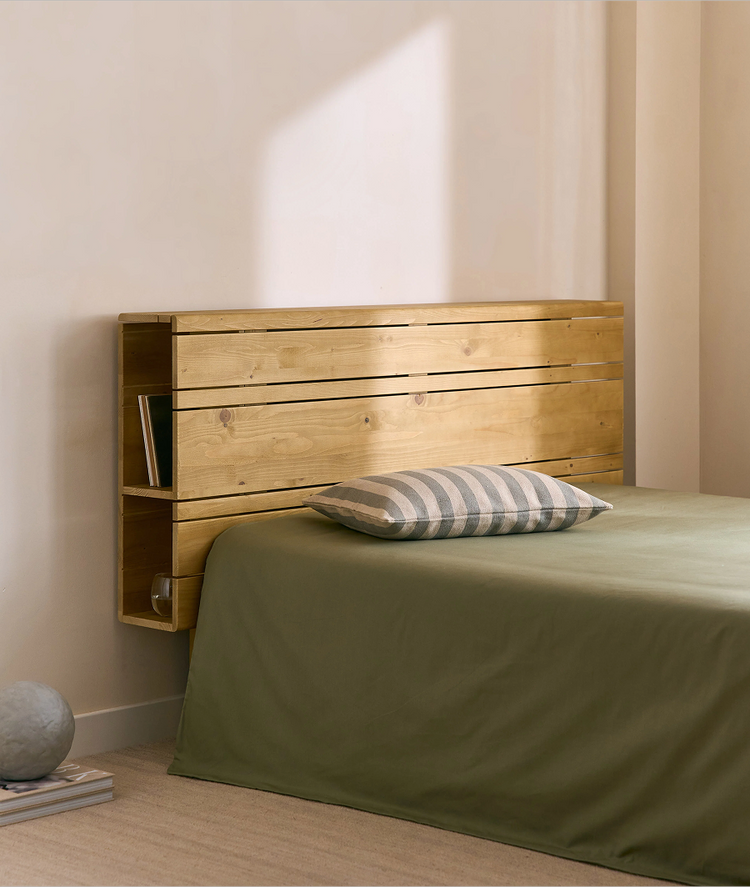
Igor storage headboard
Integrated bookshelf, beds 90, 135, 150, and 180 cm179,90 €Sale price From 159,90 €Deldel Storage Bed
Solid pine wood. For beds of 135, 150, and 180 cm949,00 €Sale price From 899,00 €Kora dining table
160 / 180 / 200 cm899,00 €Sale price From 799,00 €Marnie Headboard
Natural raffia mesh, beds 90, 135, 150, and 180 cm149,90 €Sale price From 129,90 €Luna Sofa Bed
Sofa bed made of natural linen and cotton fabric / 247 cm1.199,00 €Sale price 1.099,00 €Tatami Bed Ren
140 / 150 / 160 / 180 cm949,00 €Sale price From 849,00 €Queralt shelf
Irregular edge front. 60 or 120 cm long67,99 €Sale price From 59,99 €Nia Chair
Solid teak wood and rope239,90 €Sale price 209,90 €Aloma modular shelving
Sustainable pine wood. 4 movable shelves219,90 €Sale price 179,90 €Lira dresser
Solid teak wood and rope, four drawers899,00 €Sale price 829,00 €Neo sideboard
Solid teak wood1.299,00 €Sale price 1.149,00 €Nala Headboard
Solid wood, beds 90, 135, 150, and 180 cm119,90 €Sale price From 109,90 €Tosca Extendable Dining Table
120 cm · Extends to 160 cm899,00 €Sale price 799,00 €TV Stand Ciro
Solid teak wood849,00 €Sale price 749,00 €Headboard with storage Cédric
Solid pine wood headboard 100 cm / 145 cm / 160 cm / 190 cm249,90 €Sale price From 219,90 €Biel Desk
118 cm499,90 €Sale price 449,00 €Ilor TV Unit
Oak and rattan699,00 €Sale price 649,00 €Sile Bookcase
128 cm599,00 €Sale price 549,00 €Teva Sideboard
Oak and rattan999,00 €Sale price 899,00 €Palmira lift-up coffee table
Pine wood with rounded corners. 100 x 42 x 70 cm349,90 €Sale price 299,90 €Codos Desk
100 cm369,90 €Sale price 319,90 €Dune upholstered storage bed
140 /160 / 180 cm899,00 €Sale price From 809,00 €Kivo Bookcase
128 cm399,90 €Sale price 349,90 €Elia Bed
160 cm1.199,00 €Sale price 1.099,00 €Margot Extendable Dining Table
180 cm · Extendable to 220 cm1.099,00 €Sale price 999,00 €Carole bedside table
Solid pine wood bedside table 41.5 x 50 x 31.5159,90 €Sale price 139,90 €Maru hallway bench / shoe cabinet
Solid teak wood649,00 €Sale price 549,00 €Marnie chest of drawers (4 drawers)
With natural raffia mesh. 86 x 92 x 44 cm809,00 €Sale price 649,00 €Ateca Desk
128 cm349,90 €Sale price 299,90 €Upholstered chair Sena
Solid beech wood229,90 €Sale price 209,90 €Marnie Bedside Table
35 x 50 cm149,90 €Sale price 129,90 €Maia Dining Table
140/160/180/200/220 cm599,00 €Sale price From 499,90 €Tera TV stand
Solid teak wood749,00 €Sale price 649,00 €Rayons headboard
Solid pine wood headboard 100 cm / 145 cm / 160 cm / 190 cm189,90 €Sale price From 159,90 €Arnau chaise longue sofa
3-seater with chaise lounge in recycled polyester fabric 240 cm / 260 cm1.649,00 €Sale price From 1.449,00 €Anhelí Double Tatami
Reclaimed pine wood. For beds of 135, 150, and 180 cm879,00 €Sale price From 699,00 €Dining table Dina
140 / 160 / 180 / 200 / 220 cm899,00 €Sale price From 779,00 €Raizo TV unit
Solid teak wood799,00 €Sale price 699,00 €Nest upholstered headboard
140 /160 / 180 cm299,90 €Sale price From 279,90 €Clay upholstered headboard
140 /160 / 180 cm229,90 €Sale price From 209,90 €Odelia Dining Table
140/160/180/200/220 cm719,00 €Sale price From 609,00 €Kael sideboard
Solid teak wood599,00 €Sale price 499,90 €Numa dining table
160 / 180 / 200 / 220 cm689,00 €Sale price From 549,00 €Dera Bed
140 / 160 / 180 cm899,00 €Sale price From 799,00 €Dena Mirror
90 / 150 cm199,90 €Sale price From 169,90 €Chair Sena
Solid beech wood219,90 €Sale price 199,90 €Nodo Modular Shelf
50 x 27 x 36 cm67,99 €Sale price 59,99 €Haydé shoe rack sideboard
Doors with rattan mesh. 80, 100, or 120 cm479,90 €Sale price From 429,90 €Bobbie floating bedside table
40 cm44,99 €Sale price 37,99 €Carole two-drawer bedside table
Solid pine wood bedside table 41.5 x 50 x 31.5199,90 €Sale price 159,90 €