To decorate a child's bedroom, think in four zones: sleep, play, storage and, later on, study. Leave the centre free for play and choose solid wood furniture that grows with your child. Put storage at their height so they can tidy up on their own, and use a base of soft colours that you can liven up with textiles and prints that are easy to change. Warm, dimmable light helps at bedtime.
Children grow up fast, and their bedroom should keep up with them without having to change everything every few years. That's why it pays to invest in sturdy, versatile furniture, like the pieces in our Kids collection, and leave colour and patterns to the accessories. Here are the key ideas.
How to lay out a child's bedroom
-
Bed against the wall to free up the centre and create a cosy, sheltered feel.
-
Play area in the centre or by the window, with a large, washable rug.
-
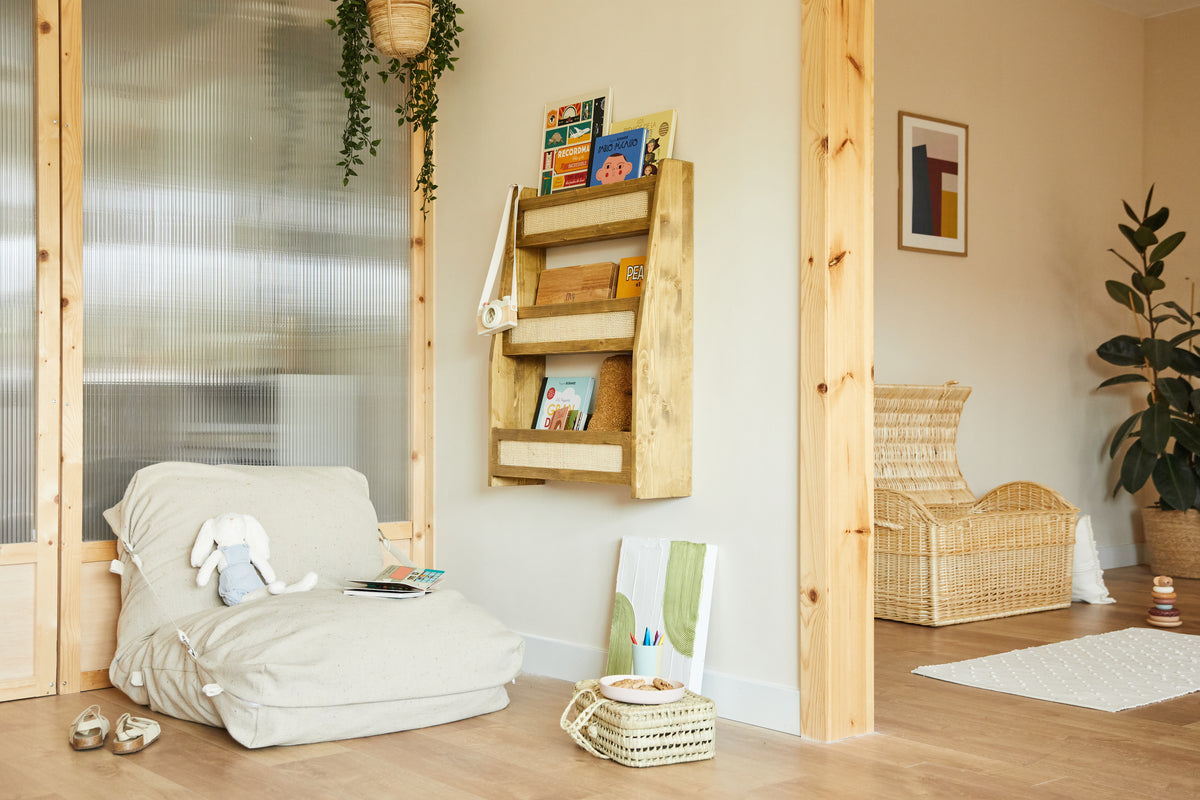
Low, accessible storage: open shelves, baskets and drawers at their height.
-
Desk near natural light once they start school.
Furniture that grows with your child
Choose simple, solid wood pieces: a low wardrobe that can later hold toys, a shelving unit that will go from storybooks to textbooks, or a chest of drawers that starts out as a changing table. Rounded edges and child-safe finishes are a must.

Tayen changing chest of drawers

Tayen Montessori wardrobe
Tidiness at their height
If children can reach their things, they will learn to put them away. Use low shelves with just a few things on display, baskets by category (building blocks, soft toys, dressing-up clothes) and hooks at their height for their school bag and coat. Rotate toys from time to time: fewer options on view make both play and tidying easier.

Bernice basket
A corner for play and activities
A child-sized table and chair for drawing, a soft rug and a floor cushion for reading. If you're interested in the Montessori approach, we explain it in the Montessori method in children's bedrooms.

Zareth children's table
Colours and walls
A neutral base (warm white, sand, sage green or soft blue) with colour coming from textiles, prints and toys. Wallpaper or a mural on just one wall, or a chalkboard at their height, adds personality without overwhelming the space. Themed motifs (animals, space, the sea) are best kept to pieces that are easy to swap when their tastes change.
Lighting
-
Soft, warm general light on the ceiling.
-
Reading lamp by the bed, with dimmable light for story time.
-
Desk light once they start doing homework.
-
Dim night light to keep night-time fears at bay.
Natural textiles
Cotton bedding, washable rugs and curtains that block out light well. Natural fabrics breathe better and feel nicer on children's skin.
If you're preparing a room for a newborn, you'll find specific ideas in baby nurseries. And for when they need more space for books, take a look at our wooden shelving units.
Frequently asked questions
How do you lay out a small child's bedroom?
Bed against the wall, storage up high and under the bed, and the centre left free for play. Multifunctional furniture, such as a changing chest of drawers, saves space.
What colours are best for a child's bedroom?
A base of soft tones (warm white, sand, light green or light blue), with bold colour in textiles and accessories that are easy to change.
What furniture does a child's bedroom need?
A bed, a wardrobe or chest of drawers, a low shelving unit for toys and books, and a child-sized table and chair. Later on, a desk.
How can you encourage tidiness in a child's bedroom?
With storage at their height, baskets by category, just a few toys on display and a set place for everything.
What lighting should a child's bedroom have?
Warm general light, a dimmable lamp by the bed and, if needed, a dim light for the night.


 and how does it work?



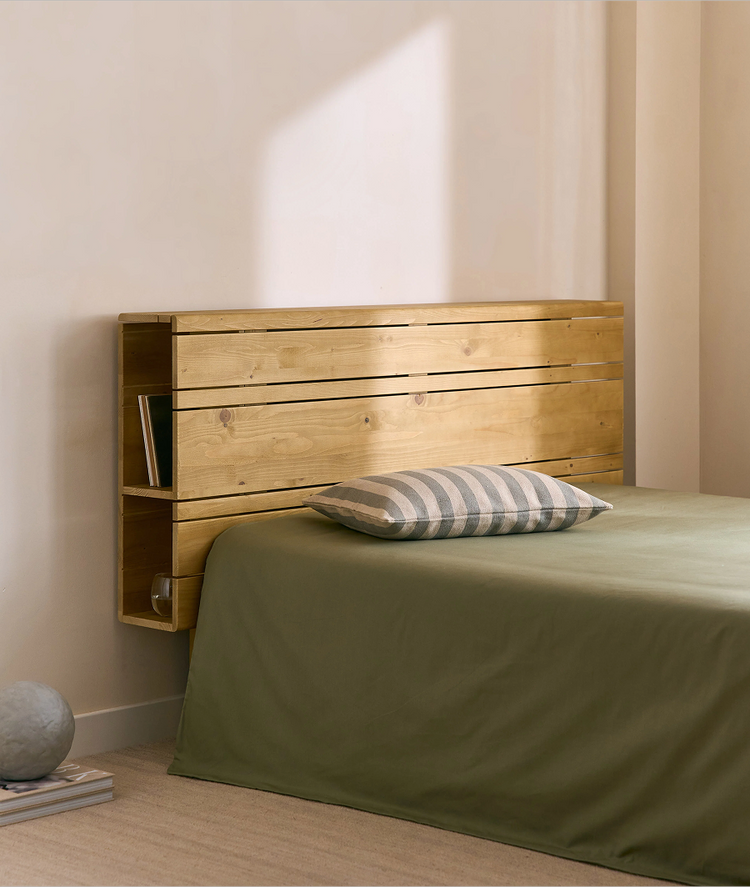
Igor storage headboard
Integrated bookshelf, beds 90, 135, 150, and 180 cm179,90 €Sale price From 159,90 €Deldel Storage Bed
Solid pine wood. For beds of 135, 150, and 180 cm949,00 €Sale price From 899,00 €Kora dining table
160 / 180 / 200 cm899,00 €Sale price From 799,00 €Marnie Headboard
Natural raffia mesh, beds 90, 135, 150, and 180 cm149,90 €Sale price From 129,90 €Luna Sofa Bed
Sofa bed made of natural linen and cotton fabric / 247 cm1.199,00 €Sale price 1.099,00 €Tatami Bed Ren
140 / 150 / 160 / 180 cm949,00 €Sale price From 849,00 €Queralt shelf
Irregular edge front. 60 or 120 cm long67,99 €Sale price From 59,99 €Nia Chair
Solid teak wood and rope239,90 €Sale price 209,90 €Aloma modular shelving
Sustainable pine wood. 4 movable shelves219,90 €Sale price 179,90 €Lira dresser
Solid teak wood and rope, four drawers899,00 €Sale price 829,00 €Neo sideboard
Solid teak wood1.299,00 €Sale price 1.149,00 €Nala Headboard
Solid wood, beds 90, 135, 150, and 180 cm119,90 €Sale price From 109,90 €Tosca Extendable Dining Table
120 cm · Extends to 160 cm899,00 €Sale price 799,00 €TV Stand Ciro
Solid teak wood849,00 €Sale price 749,00 €Headboard with storage Cédric
Solid pine wood headboard 100 cm / 145 cm / 160 cm / 190 cm249,90 €Sale price From 219,90 €Biel Desk
118 cm499,90 €Sale price 449,00 €Ilor TV Unit
Oak and rattan699,00 €Sale price 649,00 €Sile Bookcase
128 cm599,00 €Sale price 549,00 €Teva Sideboard
Oak and rattan999,00 €Sale price 899,00 €Palmira lift-up coffee table
Pine wood with rounded corners. 100 x 42 x 70 cm349,90 €Sale price 299,90 €Codos Desk
100 cm369,90 €Sale price 319,90 €Dune upholstered storage bed
140 /160 / 180 cm899,00 €Sale price From 809,00 €Kivo Bookcase
128 cm399,90 €Sale price 349,90 €Elia Bed
160 cm1.199,00 €Sale price 1.099,00 €Margot Extendable Dining Table
180 cm · Extendable to 220 cm1.099,00 €Sale price 999,00 €Carole bedside table
Solid pine wood bedside table 41.5 x 50 x 31.5159,90 €Sale price 139,90 €Maru hallway bench / shoe cabinet
Solid teak wood649,00 €Sale price 549,00 €Marnie chest of drawers (4 drawers)
With natural raffia mesh. 86 x 92 x 44 cm809,00 €Sale price 649,00 €Ateca Desk
128 cm349,90 €Sale price 299,90 €Upholstered chair Sena
Solid beech wood229,90 €Sale price 209,90 €Marnie Bedside Table
35 x 50 cm149,90 €Sale price 129,90 €Maia Dining Table
140/160/180/200/220 cm599,00 €Sale price From 499,90 €Tera TV stand
Solid teak wood749,00 €Sale price 649,00 €Rayons headboard
Solid pine wood headboard 100 cm / 145 cm / 160 cm / 190 cm189,90 €Sale price From 159,90 €Arnau chaise longue sofa
3-seater with chaise lounge in recycled polyester fabric 240 cm / 260 cm1.649,00 €Sale price From 1.449,00 €Anhelí Double Tatami
Reclaimed pine wood. For beds of 135, 150, and 180 cm879,00 €Sale price From 699,00 €Dining table Dina
140 / 160 / 180 / 200 / 220 cm899,00 €Sale price From 779,00 €Raizo TV unit
Solid teak wood799,00 €Sale price 699,00 €Nest upholstered headboard
140 /160 / 180 cm299,90 €Sale price From 279,90 €Clay upholstered headboard
140 /160 / 180 cm229,90 €Sale price From 209,90 €Odelia Dining Table
140/160/180/200/220 cm719,00 €Sale price From 609,00 €Kael sideboard
Solid teak wood599,00 €Sale price 499,90 €Numa dining table
160 / 180 / 200 / 220 cm689,00 €Sale price From 549,00 €Dera Bed
140 / 160 / 180 cm899,00 €Sale price From 799,00 €Dena Mirror
90 / 150 cm199,90 €Sale price From 169,90 €Chair Sena
Solid beech wood219,90 €Sale price 199,90 €Nodo Modular Shelf
50 x 27 x 36 cm67,99 €Sale price 59,99 €Haydé shoe rack sideboard
Doors with rattan mesh. 80, 100, or 120 cm479,90 €Sale price From 429,90 €Bobbie floating bedside table
40 cm44,99 €Sale price 37,99 €Carole two-drawer bedside table
Solid pine wood bedside table 41.5 x 50 x 31.5199,90 €Sale price 159,90 €