“Being aware of the space we live in so that we feel better. Flowing with it to make way for harmony: a harmony that begins with our surroundings and decor and becomes an inner state of wellbeing.”
Feng shui is a philosophy that originated in China around 3,500 years ago and studies how the way we organise our home affects how we feel. Furniture can be beautiful, practical and essential, but it can also play a less visible role: helping us create a calm space full of positive energy.
Where we place the furniture, the colours, the materials and the objects we choose… Everything is interconnected when we apply the rules of feng shui. In this guide we explain what it is, its basic principles and how to apply it in every room, with special attention to the bedroom, where it makes the biggest difference.
Feng shui: the philosophy of chi
According to ancient Chinese philosophy, chi literally means “life force”: the energy that moves us and, in its natural state, keeps us in balance. In a home, we can imagine this energy as a current of air that comes in through doors and windows, travels along the hallways and breathes in every room.
Feng shui aims for chi to flow through the home in a balanced way: neither too fast nor too slow. The direction it takes depends on the furniture and objects it meets along the way, which is why layout is so important. The goal is to create a sanctuary of wellbeing in your home.

Rule 1: a clean, tidy space
If you're familiar with the Marie Kondo method, you already know where to start. To fill your home with positive energy, you first need to clear it out: let go of the things you no longer use and give everything a good clean to create a tidy foundation.
Clutter slows down the movement of chi and makes a space feel heavy. The key is balance: keep what brings you wellbeing and happy memories, without going to extremes. Start with the wardrobes and high surfaces and finish with the lowest areas.
Rule 2: well-placed mirrors
Mirrors are one of the most important elements in feng shui. They represent the water element and are used to direct the flow of energy and bring in light and a sense of space.
The main rule is not to place them opposite the front door, so that energy doesn't “bounce” back outside. It's better to hang them on side walls and angle them towards something that inspires you, such as a window with a view or a lovely corner of the house, to double that feeling.

Dena mirror
Rule 3: the wood element
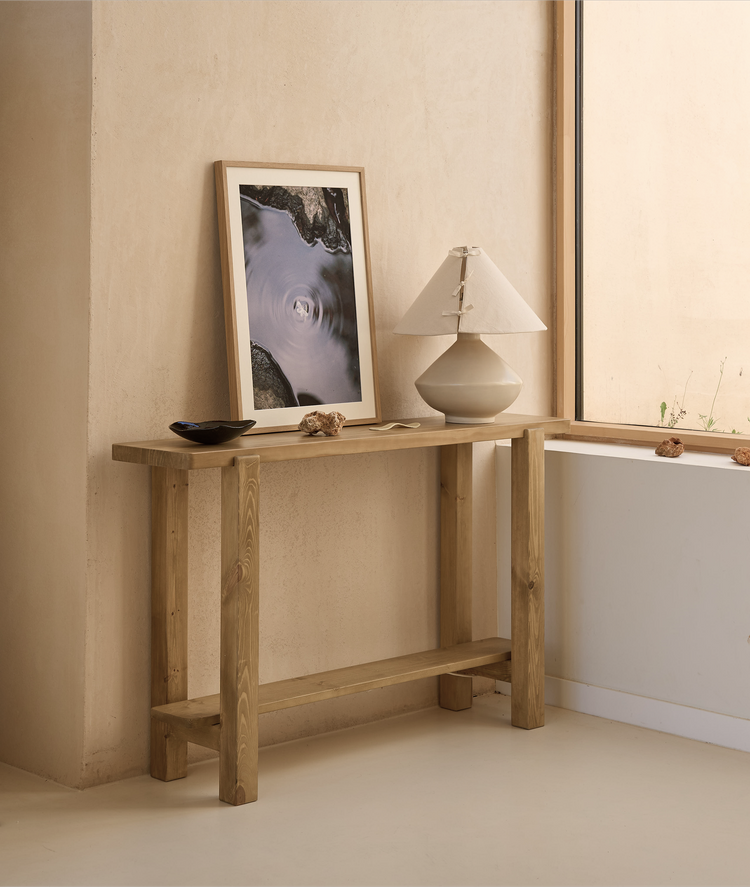
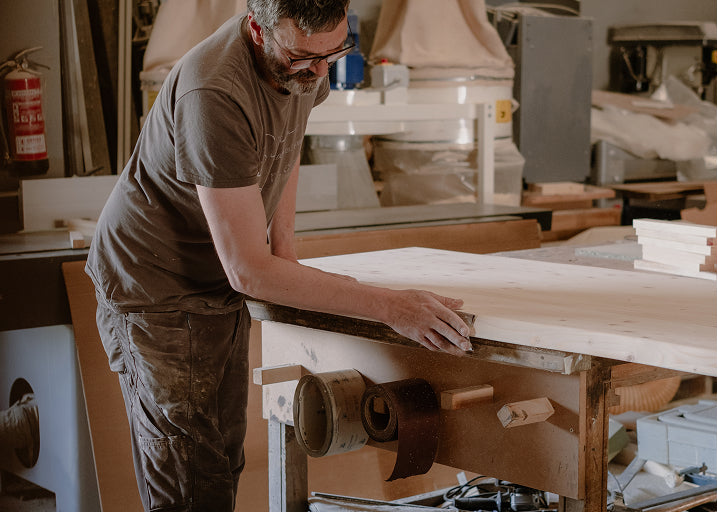
According to feng shui, wood is one of the five main elements. It represents growing energy and is associated with creativity, vitality and renewal. A handcrafted piece of solid wood furniture brings warmth and a connection with nature to any room.
You can bring it in through flooring, decorative accents or key pieces such as shelving units, tables or beds. If you'd like to know which wood to choose for each piece, take a look at our guide to types of wood for furniture.

Thyone side table
Rule 4: colours and the five elements
Colours change the look of a room, but according to feng shui they also influence how we feel. This philosophy links colours to the five elements:
-
Fire (red, orange, yellow, pink, purple): energy, passion and change.
-
Earth (browns, beige, terracotta): stability and calm.
-
Metal (whites and greys): clarity and order.
-
Water (blues and blacks): fluidity and movement.
-
Wood (greens): vitality, health and growth.
Choose your palette according to the atmosphere you want to create in each room: earth tones and neutrals for resting, and touches of brighter colour in activity areas.

Rule 5: say yes to rounded shapes
Feng shui recommends bringing in circular and organic shapes, because they soften the space and help energy circulate. They also avoid harsh corners which, according to this philosophy, create tension.
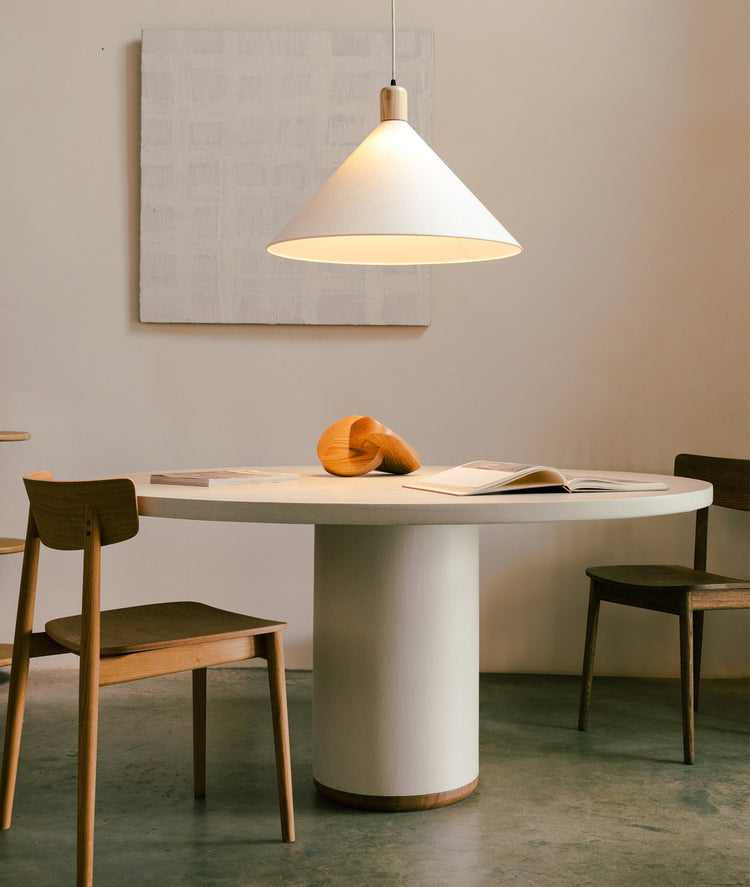
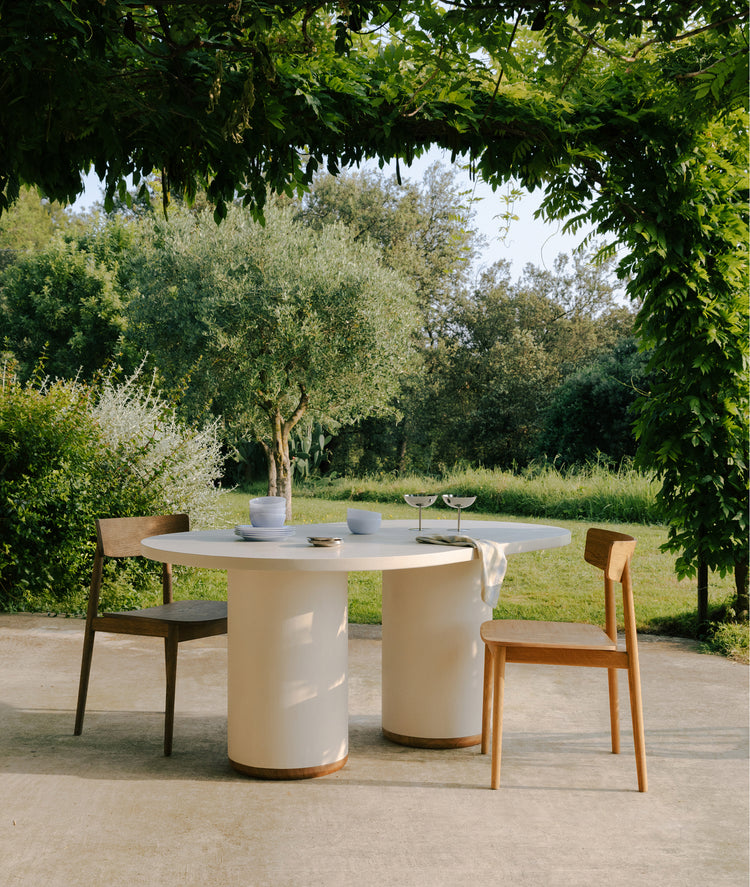
You can introduce them with a pouffe, a round natural-fibre rug, a circular mirror or a round dining table, which also encourages conversation.

Enfia footstool pouffe
Feng shui in the bedroom: where to place the bed and what to avoid
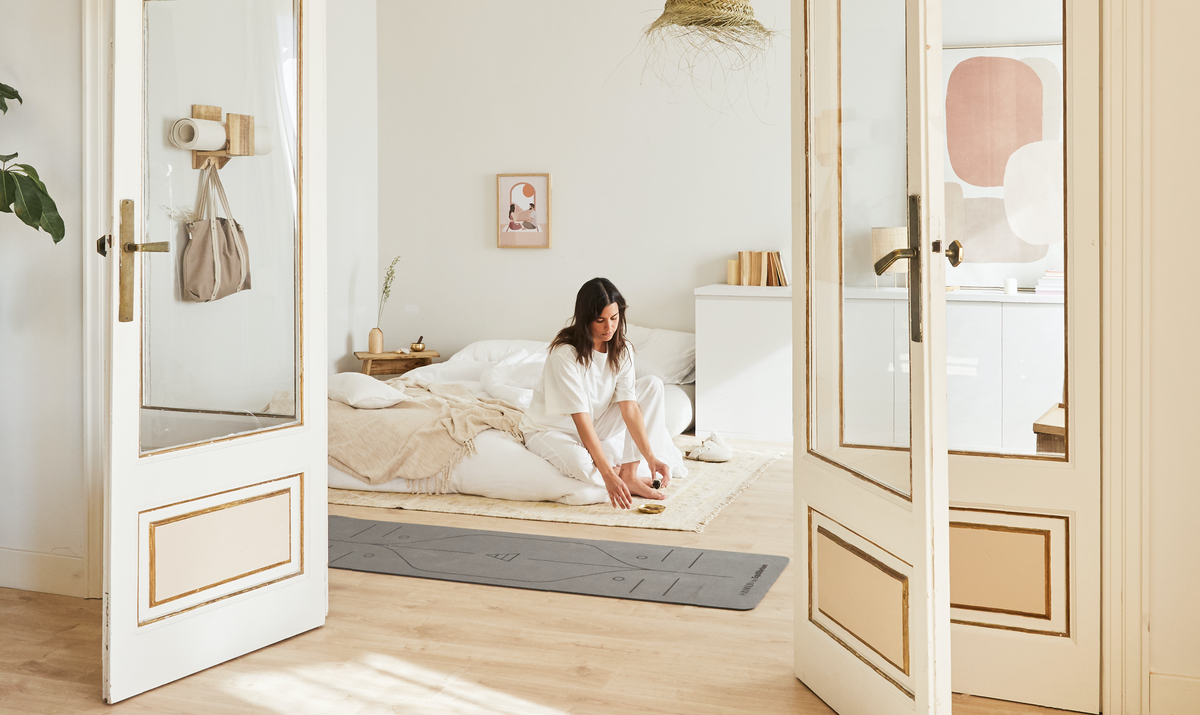
The bedroom is the room where feng shui makes the biggest difference, because it's where we rest and recharge. Yin energy, the energy of calm, should dominate here, with natural materials such as wood and cotton or linen textiles, soft colours and few objects.
Where to place the bed
-
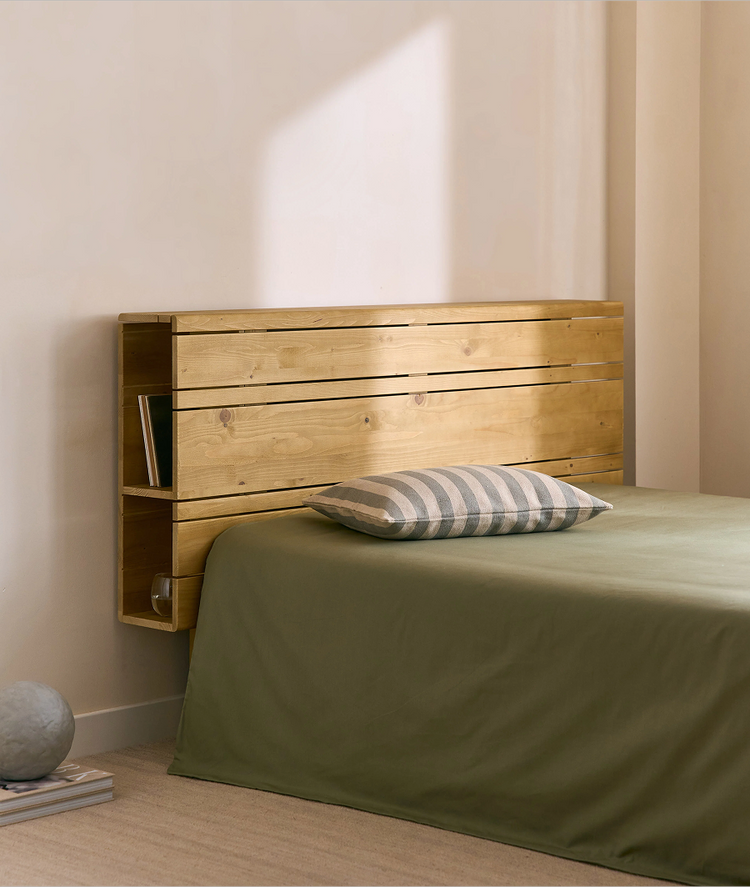
With the headboard against a solid wall. It gives a feeling of support and security. Avoid placing it under a window or with the headboard floating in the middle of the room.
-
In the “command position”. From the bed you should be able to see the door, but without being directly in line with it.
-
Out of the path between the door and the window, so that energy can circulate without passing through you while you sleep.
-
Accessible from both sides. Leaving space on either side of the bed brings balance, especially if you share it with a partner.
-
Avoid beams or shelves directly above the headboard, as they create a feeling of weight.
A good headboard
According to feng shui, the headboard symbolises protection and support. Ideally it should be solid and made of a natural material, such as wood. Designs like the Nala headboard or the Marnie headboard, made of wood and natural raffia, fit in perfectly with this philosophy. Discover all our headboards.
Matching bedside tables
Placing a bedside table on each side of the bed, ideally identical or of a similar size, creates symmetry and balance. Keep them tidy, with just a few objects: a lamp with warm light, a book and not much else. Find yours among our bedside tables.
What to avoid in a feng shui bedroom
-
Mirrors facing the bed: according to feng shui, they activate energy and make it harder to rest. If you have one, hang it on a side wall or inside the wardrobe.
-
Too many electronic devices: a TV, a computer or your phone next to the pillow.
-
Storing clutter under the bed: if you use an ottoman bed or have under-bed storage, keep only textiles and bedding in it, neatly organised.
-
Very strong colours on walls or large surfaces. Earth tones, beige, off-whites or soft greens are better.
-
Too many plants: one or two bring life, but too many overstimulate the energy of a space meant for rest.
Low Japanese-inspired beds, such as tatamis, fit especially well with this philosophy because they sit close to the floor and are so simple. You can see all the options in our collection of beds, tatamis and storage beds.

Anhelí double tatami
Feng shui in the study or home office
We spend many hours working, so applying feng shui to our work corner at home makes a lot of sense. Order and cleanliness are essential for energy to flow and help us concentrate.
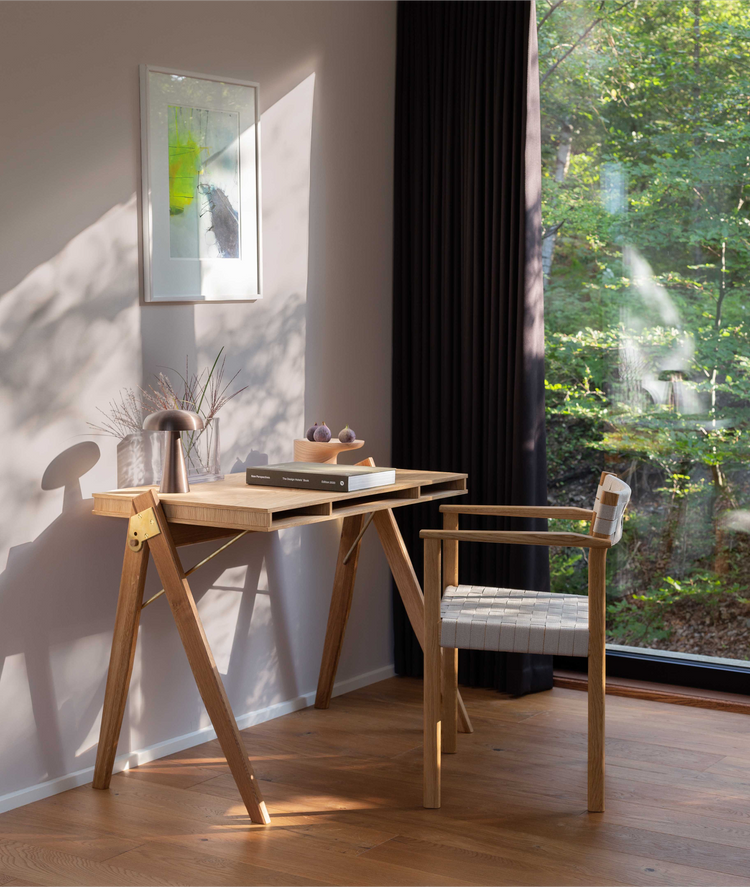
Ideally, have a desk used only for work, one that conveys stability. Position it so you can see the door of the room without turning your back to it: it's the same “command position” as in the bedroom. Discover our wooden desks.

Krasna desk
Feng shui in the bathroom
The bathroom is a space for looking after ourselves and relaxing. According to feng shui, it's best not to place the washbasin or the mirror directly opposite the door and, if possible, to position the toilet as far as possible from the shower and the washbasin.
Without overloading the space, you can add real plants, ceramic pieces, art prints or scented candles.

Kirke lantern
Feng shui in the living and dining room
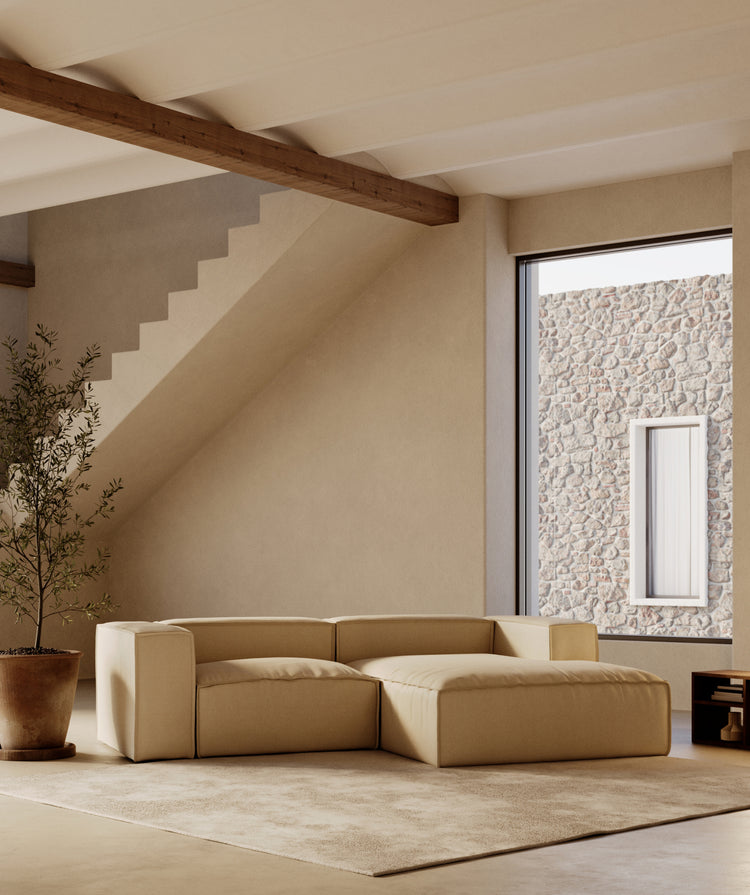
To fill your living room with good energy, don't overload the space, and favour neutral tones such as whites, beige or greys over very dark or saturated colours. In the dining area, a round dining table encourages conversation between diners.
Real plants are great allies: they bring life and help improve air quality. Some of those most recommended in feng shui are bamboo, pachira (money tree), sansevieria and ficus.

Nico plant pot
Frequently asked questions about feng shui
Where should the bed go according to feng shui?
With the headboard against a solid wall, where you can see the door without being in line with it, away from the window and with free space on both sides.
Can you have a mirror in the bedroom?
Yes, but not facing the bed. According to feng shui, it's better to hang it on a side wall or on the inside of the wardrobe door.
Which colours are best for a feng shui bedroom?
Earth tones, beige, off-whites and soft greens, which convey calm. It's best to save strong colours for small details.
Which materials does feng shui recommend?
Natural materials such as solid wood, cotton, linen or plant fibres, which bring warmth and a connection with nature.
Which plants are good according to feng shui?
Bamboo, pachira, sansevieria and ficus are some of the most recommended. In the bedroom, one or two at most.


 and how does it work?



Igor storage headboard
Integrated bookshelf, beds 90, 135, 150, and 180 cm179,90 €Sale price From 159,90 €Deldel Storage Bed
Solid pine wood. For beds of 135, 150, and 180 cm949,00 €Sale price From 899,00 €Kora dining table
160 / 180 / 200 cm899,00 €Sale price From 799,00 €Marnie Headboard
Natural raffia mesh, beds 90, 135, 150, and 180 cm149,90 €Sale price From 129,90 €Luna Sofa Bed
Sofa bed made of natural linen and cotton fabric / 247 cm1.199,00 €Sale price 1.099,00 €Tatami Bed Ren
140 / 150 / 160 / 180 cm949,00 €Sale price From 849,00 €Queralt shelf
Irregular edge front. 60 or 120 cm long67,99 €Sale price From 59,99 €Nia Chair
Solid teak wood and rope239,90 €Sale price 209,90 €Aloma modular shelving
Sustainable pine wood. 4 movable shelves219,90 €Sale price 179,90 €Lira dresser
Solid teak wood and rope, four drawers899,00 €Sale price 829,00 €Neo sideboard
Solid teak wood1.299,00 €Sale price 1.149,00 €Nala Headboard
Solid wood, beds 90, 135, 150, and 180 cm119,90 €Sale price From 109,90 €Tosca Extendable Dining Table
120 cm · Extends to 160 cm899,00 €Sale price 799,00 €TV Stand Ciro
Solid teak wood849,00 €Sale price 749,00 €Headboard with storage Cédric
Solid pine wood headboard 100 cm / 145 cm / 160 cm / 190 cm249,90 €Sale price From 219,90 €Biel Desk
118 cm499,90 €Sale price 449,00 €Ilor TV Unit
Oak and rattan699,00 €Sale price 649,00 €Sile Bookcase
128 cm599,00 €Sale price 549,00 €Teva Sideboard
Oak and rattan999,00 €Sale price 899,00 €Palmira lift-up coffee table
Pine wood with rounded corners. 100 x 42 x 70 cm349,90 €Sale price 299,90 €Codos Desk
100 cm369,90 €Sale price 319,90 €Dune upholstered storage bed
140 /160 / 180 cm899,00 €Sale price From 809,00 €Kivo Bookcase
128 cm399,90 €Sale price 349,90 €Elia Bed
160 cm1.199,00 €Sale price 1.099,00 €Margot Extendable Dining Table
180 cm · Extendable to 220 cm1.099,00 €Sale price 999,00 €Carole bedside table
Solid pine wood bedside table 41.5 x 50 x 31.5159,90 €Sale price 139,90 €Maru hallway bench / shoe cabinet
Solid teak wood649,00 €Sale price 549,00 €Marnie chest of drawers (4 drawers)
With natural raffia mesh. 86 x 92 x 44 cm809,00 €Sale price 649,00 €Ateca Desk
128 cm349,90 €Sale price 299,90 €Upholstered chair Sena
Solid beech wood229,90 €Sale price 209,90 €Marnie Bedside Table
35 x 50 cm149,90 €Sale price 129,90 €Maia Dining Table
140/160/180/200/220 cm599,00 €Sale price From 499,90 €Tera TV stand
Solid teak wood749,00 €Sale price 649,00 €Rayons headboard
Solid pine wood headboard 100 cm / 145 cm / 160 cm / 190 cm189,90 €Sale price From 159,90 €Arnau chaise longue sofa
3-seater with chaise lounge in recycled polyester fabric 240 cm / 260 cm1.649,00 €Sale price From 1.449,00 €Anhelí Double Tatami
Reclaimed pine wood. For beds of 135, 150, and 180 cm879,00 €Sale price From 699,00 €Dining table Dina
140 / 160 / 180 / 200 / 220 cm899,00 €Sale price From 779,00 €Raizo TV unit
Solid teak wood799,00 €Sale price 699,00 €Nest upholstered headboard
140 /160 / 180 cm299,90 €Sale price From 279,90 €Clay upholstered headboard
140 /160 / 180 cm229,90 €Sale price From 209,90 €Odelia Dining Table
140/160/180/200/220 cm719,00 €Sale price From 609,00 €Kael sideboard
Solid teak wood599,00 €Sale price 499,90 €Numa dining table
160 / 180 / 200 / 220 cm689,00 €Sale price From 549,00 €Dera Bed
140 / 160 / 180 cm899,00 €Sale price From 799,00 €Dena Mirror
90 / 150 cm199,90 €Sale price From 169,90 €Chair Sena
Solid beech wood219,90 €Sale price 199,90 €Nodo Modular Shelf
50 x 27 x 36 cm67,99 €Sale price 59,99 €Haydé shoe rack sideboard
Doors with rattan mesh. 80, 100, or 120 cm479,90 €Sale price From 429,90 €Bobbie floating bedside table
40 cm44,99 €Sale price 37,99 €Carole two-drawer bedside table
Solid pine wood bedside table 41.5 x 50 x 31.5199,90 €Sale price 159,90 €