To lay out a small bedroom, position the bed first: usually with the headboard against the longest wall without a window, or pushed against the wall if it's a single. Leave at least 60 cm of clearance on the sides you use and around 70-90 cm in front of the wardrobe. Then move storage up the walls, choose dual-purpose furniture (ottoman bed, headboard with shelves, floating bedside table) and use wall lights to keep surfaces clear.
In just a few square metres, every centimetre counts. The good news is that with the right measurements and the right furniture, a small bedroom can be just as comfortable as a large one. Our bedroom furniture includes pieces designed for compact spaces. Here's how to do it, step by step.
Before you start: measure and sketch
Measure the length, width and height, and mark doors, windows, radiators and sockets. Sketch a simple floor plan and try out positions for the bed and wardrobe on paper. It'll save you moving furniture around and buying pieces that don't fit.
Where to put the bed in a small room
-
Double bed: with the headboard against the longest free wall and access on both sides (at least 50-60 cm).
-
Single bed: pushed against the wall on one side, to free up floor space.
-
Avoid placing it under a window if there are draughts, or opposite the door if it gets in the way.
-
Choose the right size: going from 150 to 135 cm wide frees up 15 cm of clearance. You'll find all the sizes in our guide to bed sizes.

Deldel double storage bed
An ottoman bed takes up the same space as the mattress and stores everything that doesn't fit in the wardrobe underneath. You'll find more options in beds, tatamis and storage beds.
Where to put the wardrobe
On the same wall as the door or on the wall opposite the window, so it doesn't block the light. Leave around 70-90 cm in front if it has hinged doors; with sliding doors or an open wardrobe, you can reduce that clearance. If a wardrobe won't fit, a tall chest of drawers and a wall-mounted coat rack can replace it.
Multifunctional furniture
-
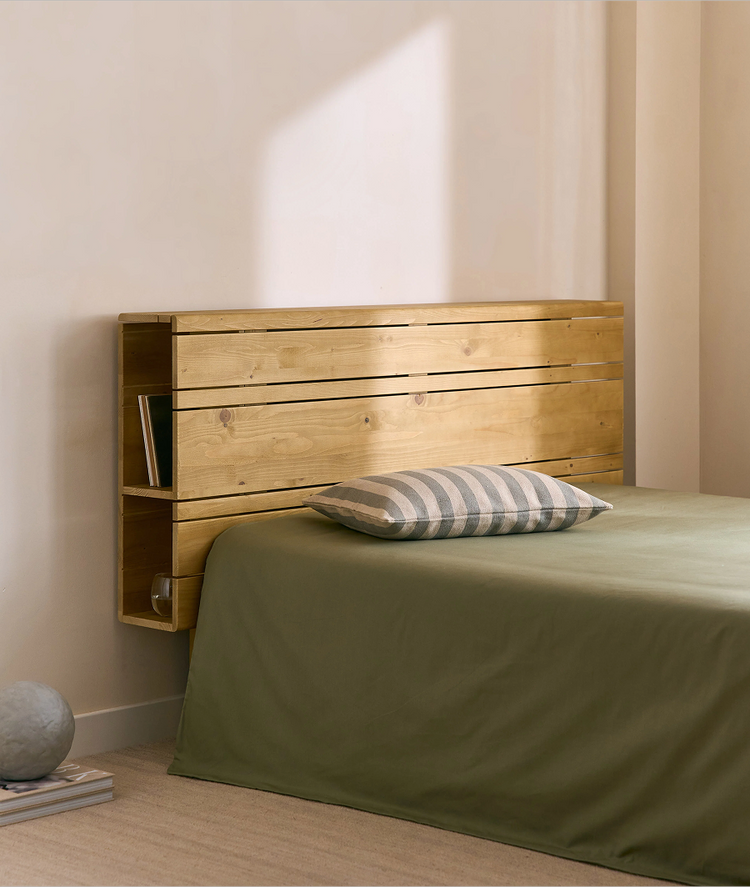
Headboard with storage: shelves or cubbies for books and your phone, with no need for bedside tables.
-
Floating bedside table: keeps the floor clear and makes the room look bigger.
-
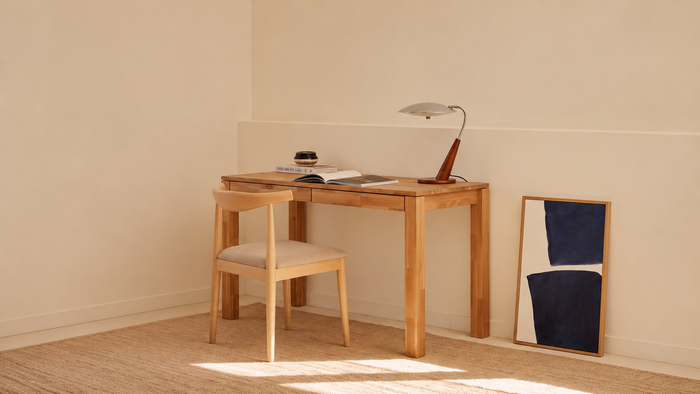
A narrow desk that doubles as a dressing table.
-
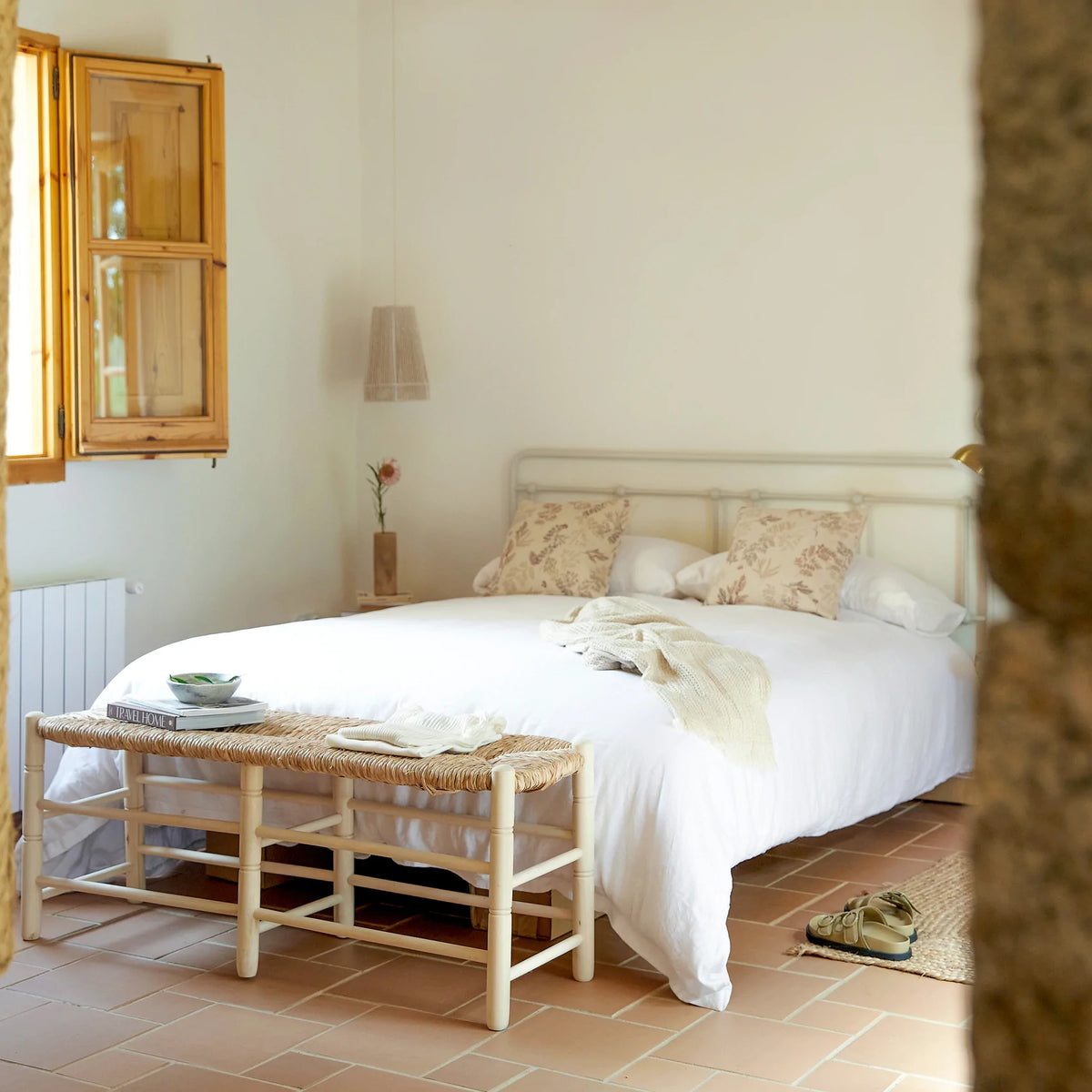
A bench at the foot of the bed with storage for blankets.

Igor headboard with storage

Bobbie floating bedside table
If you prefer bedside tables with a drawer, take a look at our shallower bedside tables.
Make the most of the height
Floor-to-ceiling shelving, a long shelf above the bed or the door, and wall-mounted coat racks. Everything that goes up frees up the floor, and that's what makes a room look bigger.

Tari floating shelf
Light and colour
-
Wall lights on either side of the bed instead of bedside lamps.
-
Light colours on walls and textiles, and wood in natural tones.
-
A large mirror perpendicular to the window to multiply the light.
-
Light curtains that let natural light through.
You'll find more ideas in how to arrange bedroom furniture and in our tips for making the most of small spaces.
Frequently asked questions
Where should the bed go in a small bedroom?
With the headboard against the longest wall without a window if it's a double, or pushed against a side wall if it's a single, leaving at least 50-60 cm of clearance on the sides you use.
How much space should you leave around the bed?
As a guide, between 50 and 70 cm on the sides you get in from and around 70-90 cm in front of the wardrobe if it has hinged doors.
Which bed takes up the least space?
An ottoman bed, because it takes up exactly the size of the mattress and also provides storage. Tatamis and beds with a surrounding frame take up a little more.
How can you gain space in a small bedroom?
With multifunctional furniture, high-level storage, floating bedside tables, wall lights and light colours that make the room feel more spacious.
What can you do if a wardrobe won't fit?
Combine a chest of drawers, a wall-mounted coat rack or clothes rail and under-bed storage. They're shallower and suit small rooms better.


 and how does it work?





Igor storage headboard
Integrated bookshelf, beds 90, 135, 150, and 180 cm179,90 €Sale price From 159,90 €Deldel Storage Bed
Solid pine wood. For beds of 135, 150, and 180 cm949,00 €Sale price From 899,00 €Kora dining table
160 / 180 / 200 cm899,00 €Sale price From 799,00 €Marnie Headboard
Natural raffia mesh, beds 90, 135, 150, and 180 cm149,90 €Sale price From 129,90 €Luna Sofa Bed
Sofa bed made of natural linen and cotton fabric / 247 cm1.199,00 €Sale price 1.099,00 €Tatami Bed Ren
140 / 150 / 160 / 180 cm949,00 €Sale price From 849,00 €Queralt shelf
Irregular edge front. 60 or 120 cm long67,99 €Sale price From 59,99 €Nia Chair
Solid teak wood and rope239,90 €Sale price 209,90 €Aloma modular shelving
Sustainable pine wood. 4 movable shelves219,90 €Sale price 179,90 €Lira dresser
Solid teak wood and rope, four drawers899,00 €Sale price 829,00 €Neo sideboard
Solid teak wood1.299,00 €Sale price 1.149,00 €Nala Headboard
Solid wood, beds 90, 135, 150, and 180 cm119,90 €Sale price From 109,90 €Tosca Extendable Dining Table
120 cm · Extends to 160 cm899,00 €Sale price 799,00 €TV Stand Ciro
Solid teak wood849,00 €Sale price 749,00 €Headboard with storage Cédric
Solid pine wood headboard 100 cm / 145 cm / 160 cm / 190 cm249,90 €Sale price From 219,90 €Biel Desk
118 cm499,90 €Sale price 449,00 €Ilor TV Unit
Oak and rattan699,00 €Sale price 649,00 €Sile Bookcase
128 cm599,00 €Sale price 549,00 €Teva Sideboard
Oak and rattan999,00 €Sale price 899,00 €Palmira lift-up coffee table
Pine wood with rounded corners. 100 x 42 x 70 cm349,90 €Sale price 299,90 €Codos Desk
100 cm369,90 €Sale price 319,90 €Dune upholstered storage bed
140 /160 / 180 cm899,00 €Sale price From 809,00 €Kivo Bookcase
128 cm399,90 €Sale price 349,90 €Elia Bed
160 cm1.199,00 €Sale price 1.099,00 €Margot Extendable Dining Table
180 cm · Extendable to 220 cm1.099,00 €Sale price 999,00 €Carole bedside table
Solid pine wood bedside table 41.5 x 50 x 31.5159,90 €Sale price 139,90 €Maru hallway bench / shoe cabinet
Solid teak wood649,00 €Sale price 549,00 €Marnie chest of drawers (4 drawers)
With natural raffia mesh. 86 x 92 x 44 cm809,00 €Sale price 649,00 €Ateca Desk
128 cm349,90 €Sale price 299,90 €Upholstered chair Sena
Solid beech wood229,90 €Sale price 209,90 €Marnie Bedside Table
35 x 50 cm149,90 €Sale price 129,90 €Maia Dining Table
140/160/180/200/220 cm599,00 €Sale price From 499,90 €Tera TV stand
Solid teak wood749,00 €Sale price 649,00 €Rayons headboard
Solid pine wood headboard 100 cm / 145 cm / 160 cm / 190 cm189,90 €Sale price From 159,90 €Arnau chaise longue sofa
3-seater with chaise lounge in recycled polyester fabric 240 cm / 260 cm1.649,00 €Sale price From 1.449,00 €Anhelí Double Tatami
Reclaimed pine wood. For beds of 135, 150, and 180 cm879,00 €Sale price From 699,00 €Dining table Dina
140 / 160 / 180 / 200 / 220 cm899,00 €Sale price From 779,00 €Raizo TV unit
Solid teak wood799,00 €Sale price 699,00 €Nest upholstered headboard
140 /160 / 180 cm299,90 €Sale price From 279,90 €Clay upholstered headboard
140 /160 / 180 cm229,90 €Sale price From 209,90 €Odelia Dining Table
140/160/180/200/220 cm719,00 €Sale price From 609,00 €Kael sideboard
Solid teak wood599,00 €Sale price 499,90 €Numa dining table
160 / 180 / 200 / 220 cm689,00 €Sale price From 549,00 €Dera Bed
140 / 160 / 180 cm899,00 €Sale price From 799,00 €Dena Mirror
90 / 150 cm199,90 €Sale price From 169,90 €Chair Sena
Solid beech wood219,90 €Sale price 199,90 €Nodo Modular Shelf
50 x 27 x 36 cm67,99 €Sale price 59,99 €Haydé shoe rack sideboard
Doors with rattan mesh. 80, 100, or 120 cm479,90 €Sale price From 429,90 €Bobbie floating bedside table
40 cm44,99 €Sale price 37,99 €Carole two-drawer bedside table
Solid pine wood bedside table 41.5 x 50 x 31.5199,90 €Sale price 159,90 €