Has one of your wooden pieces of furniture been damaged? Have you inherited your grandmother's beautiful chest of drawers and time has left its mark on it? Have you fallen in love with the character of the furniture in Hannun's Reuse Market? Most scratches, stains, cracks and small dents in wood can be easily disguised and, in the mildest cases, you won't need a professional restorer. In this guide we explain how to do it yourself, step by step. And if you're looking for pieces made to last, in our reclaimed wood furniture the marks of time are part of their charm.

Makemba shelving unit
What damage your furniture has and how to fix it
Before you start, identify the type of damage. This table will help you work out which solution you need:
| Damage |
Solution |
Difficulty |
| Very light scratch |
Walnut or touch-up marker |
Very easy |
| Surface scratch |
Fine sandpaper and stain or varnish touch-up |
Easy |
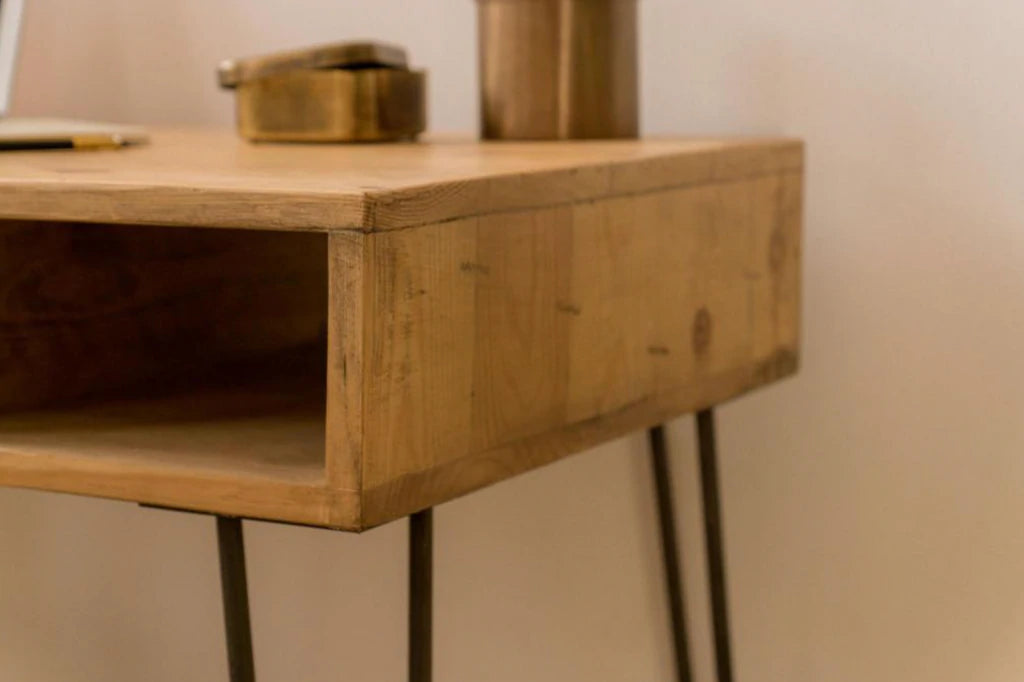
| Small hole or hairline crack |
Wax in the same shade |
Easy |
| Deep crack |
Wood filler |
Medium |
| Knock or dent |
Heat and moisture (steam) |
Medium |
| Stain |
Vinegar, bicarbonate of soda or mild soap |
Easy |
| Major or structural damage |
Restorer or carpenter |
Professional |
What to consider before repairing wooden furniture
The key is knowing whether the piece is solid wood in its natural state or whether it has a stain or varnish. In the latter case, repairing the damage will also remove part of the protective coat or colour. That's why you should keep an oil, stain or varnish in the same shade to hand so you can reapply it at the end of the process.
Before starting any repair, clean the furniture thoroughly with water and mild soap to remove ingrained dirt, and let it dry completely. And always test products first on an inconspicuous area.
What materials you'll need
Cream wax is the handiest material for covering scratches, while hard wax is ideal for filling slightly more visible cracks. Other useful materials are sandpaper (100 and 180 grit), wood filler, touch-up markers, a putty knife, gloves, a sponge and a cotton cloth.
If your furniture is from Hannun, the finish palette helps you check the exact shade before buying the stain or varnish for the touch-up.

Hannun finish palette
How to fill small holes or cracks
You'll need: a craft knife, gloves, a sponge, a cotton cloth, fine sandpaper (180 grit), wax in the same shade as the furniture and varnish.
Step by step
- Apply a small amount of wax to the hole, using the craft knife.
- Sand to leave the surface nice and smooth, always following the grain of the wood.
- Remove any dust with a cotton cloth.
- Apply a coat of varnish with the sponge.
- Once it's dry, you can go over it again with fine sandpaper to finish disguising the damage.
For more pronounced cracks, use wood filler instead of wax.

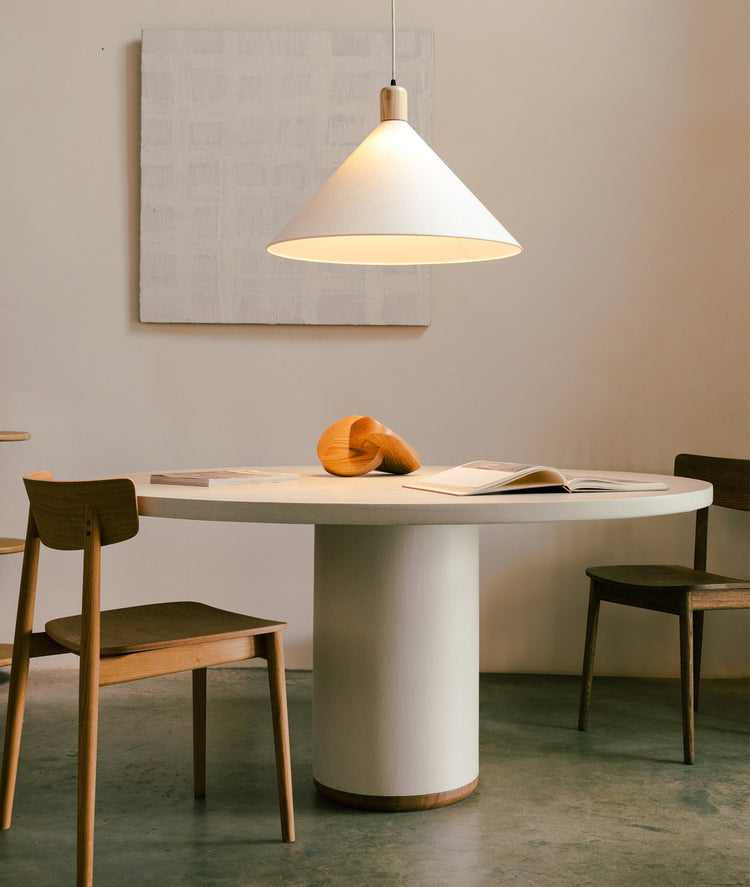
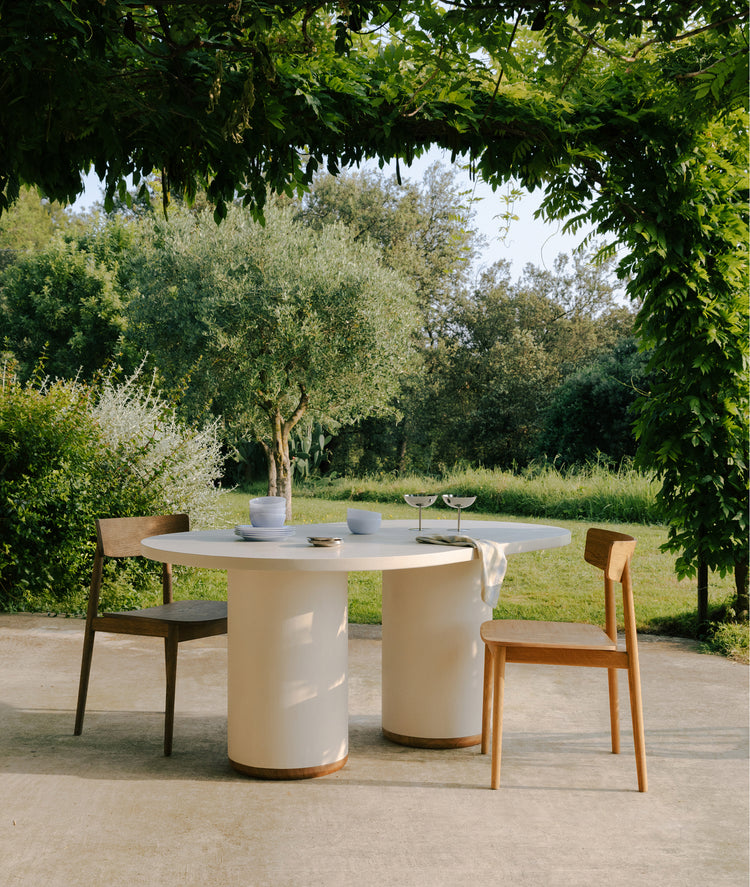
Maia dining table
How to repair surface scratches in wood
You'll need: gloves, a sponge, a cotton cloth, 100-grit sandpaper and 180-grit sandpaper.
Step by step
- Gently rub the 100-grit sandpaper over the scratch, always following the grain.
- Repeat the process with the 180-grit sandpaper to smooth the surface.
- The scratch will have disappeared, but so will part of the stain or varnish, so you'll need to reapply it.
- Remove the dust with a cloth and apply the stain or varnish with the sponge.
- When you've finished, you can gently go over it again with fine sandpaper.
If the scratch is barely noticeable, touch-up markers in different shades will help you disguise it without having to sand.

Aneu bedside table
The walnut trick for light scratches
The flesh of walnuts and almonds is very useful for disguising the lightest scratches. Their natural oils penetrate the wood and make the mark much less visible. It's one of the oldest home tricks, although it doesn't work on deep damage. You have two options:
-
Option A: crush several walnuts, mix them with a little olive oil and apply the mixture to the scratch.
-
Option B: cut a walnut in half and rub it directly over the scratch with gentle movements.
How to repair deep cracks in wood
You'll need: gloves, a sponge, a cotton cloth, 100-grit sandpaper, a putty knife and wood filler.
You might consider leaving this kind of damage on show, as it's a sign that the furniture has been lived with. If you decide to repair it, the process is very similar to the previous ones, but with a putty knife and wood filler instead of the craft knife and wax:
- Fill the crack with filler using the putty knife, pressing so it goes in well.
- Remove the excess and leave it to dry for the time recommended by the manufacturer.
- Sand the area following the grain until it's level.
- Wipe away the dust and apply stain or varnish in the same shade.

Kerlin chest of drawers
Chests of drawers and wardrobes are among the pieces whose edges take the most knocks: you'll find more solid wood models in wardrobes and chests of drawers.
How to remove knocks and dents with steam
Heat and moisture: that's the formula for making small dents disappear. Dampen a cloth with hot water, place it over the dent and apply steam with an iron or a steam cleaner. The heat and moisture make the wood fibres swell gradually and regain their shape.
Important: don't rest the iron directly on the wood. Apply the steam from a few centimetres away or through the damp cloth; otherwise you could burn it. This method works best on solid wood without thick varnishes.
How to remove stains with natural products
In your cupboard you'll find natural products that will help you remove stains from wood without harsh chemicals:
-
White cleaning vinegar: diluted in water, it's one of the most widely used thanks to its acidity.
-
Bicarbonate of soda: especially useful for removing grease.
-
Mild vegetable-oil soap: for everyday cleaning without damaging the finish.
To find out more, don't miss our article on how to clean wooden furniture with eco-friendly products.
How to remove white marks from wood
White marks or rings left by cold glasses or hot mugs are usually caused by moisture trapped under the varnish. A common trick is to apply warm air with a hairdryer, on a low setting and from a certain distance, moving it over the mark until the moisture evaporates. If the mark doesn't disappear, you may need to lightly sand the area and varnish it again.
When to call in a professional
If the furniture has structural damage, such as broken legs, loose joints or cracks that go right through the wood, or if it's a valuable antique, it's best to entrust the job to a local restorer or carpenter.
How to prevent scratches and dents
- Use coasters and placemats, especially on dining and coffee tables.
- Put felt pads on the legs of chairs and furniture that are moved often.
- Dust with a soft, dry cloth, which stops the surface getting scratched.
- Avoid direct, prolonged exposure to sunlight and heat sources.
- Choose the right wood for each use: in our guide to types of wood for furniture we explain which are the most hard-wearing.
Frequently asked questions
How do you remove a scratch from wooden furniture?
If it's light, rub a walnut over the scratch or use a touch-up marker in the same shade. If it's deeper, sand gently with 100-grit and then 180-grit sandpaper, following the grain, and reapply the stain or varnish.
What do you use to fill cracks in wood?
Fine cracks are filled with wax in the same shade as the furniture, and deeper ones with special wood filler, which is then sanded and varnished.
Can you remove a dent from wood?
Yes. Small dents can be lifted by applying heat and moisture with a damp cloth and steam, without the iron touching the wood directly.
How do you remove white marks from wood?
They're usually moisture trapped under the varnish. Applying warm air with a hairdryer on a low setting usually makes them disappear; if not, you'll need to sand and varnish again.


 and how does it work?





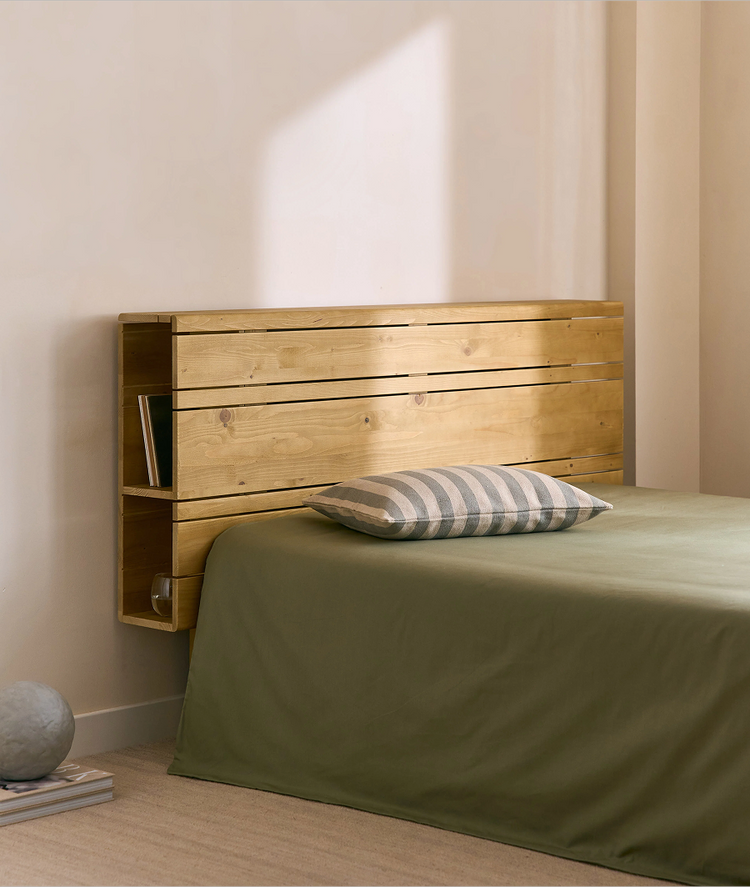
Igor storage headboard
Integrated bookshelf, beds 90, 135, 150, and 180 cm179,90 €Sale price From 159,90 €Deldel Storage Bed
Solid pine wood. For beds of 135, 150, and 180 cm949,00 €Sale price From 899,00 €Kora dining table
160 / 180 / 200 cm899,00 €Sale price From 799,00 €Marnie Headboard
Natural raffia mesh, beds 90, 135, 150, and 180 cm149,90 €Sale price From 129,90 €Luna Sofa Bed
Sofa bed made of natural linen and cotton fabric / 247 cm1.199,00 €Sale price 1.099,00 €Tatami Bed Ren
140 / 150 / 160 / 180 cm949,00 €Sale price From 849,00 €Queralt shelf
Irregular edge front. 60 or 120 cm long67,99 €Sale price From 59,99 €Nia Chair
Solid teak wood and rope239,90 €Sale price 209,90 €Aloma modular shelving
Sustainable pine wood. 4 movable shelves219,90 €Sale price 179,90 €Lira dresser
Solid teak wood and rope, four drawers899,00 €Sale price 829,00 €Neo sideboard
Solid teak wood1.299,00 €Sale price 1.149,00 €Nala Headboard
Solid wood, beds 90, 135, 150, and 180 cm119,90 €Sale price From 109,90 €Tosca Extendable Dining Table
120 cm · Extends to 160 cm899,00 €Sale price 799,00 €TV Stand Ciro
Solid teak wood849,00 €Sale price 749,00 €Headboard with storage Cédric
Solid pine wood headboard 100 cm / 145 cm / 160 cm / 190 cm249,90 €Sale price From 219,90 €Biel Desk
118 cm499,90 €Sale price 449,00 €Ilor TV Unit
Oak and rattan699,00 €Sale price 649,00 €Sile Bookcase
128 cm599,00 €Sale price 549,00 €Teva Sideboard
Oak and rattan999,00 €Sale price 899,00 €Palmira lift-up coffee table
Pine wood with rounded corners. 100 x 42 x 70 cm349,90 €Sale price 299,90 €Codos Desk
100 cm369,90 €Sale price 319,90 €Dune upholstered storage bed
140 /160 / 180 cm899,00 €Sale price From 809,00 €Kivo Bookcase
128 cm399,90 €Sale price 349,90 €Elia Bed
160 cm1.199,00 €Sale price 1.099,00 €Margot Extendable Dining Table
180 cm · Extendable to 220 cm1.099,00 €Sale price 999,00 €Carole bedside table
Solid pine wood bedside table 41.5 x 50 x 31.5159,90 €Sale price 139,90 €Maru hallway bench / shoe cabinet
Solid teak wood649,00 €Sale price 549,00 €Marnie chest of drawers (4 drawers)
With natural raffia mesh. 86 x 92 x 44 cm809,00 €Sale price 649,00 €Ateca Desk
128 cm349,90 €Sale price 299,90 €Upholstered chair Sena
Solid beech wood229,90 €Sale price 209,90 €Marnie Bedside Table
35 x 50 cm149,90 €Sale price 129,90 €Maia Dining Table
140/160/180/200/220 cm599,00 €Sale price From 499,90 €Tera TV stand
Solid teak wood749,00 €Sale price 649,00 €Rayons headboard
Solid pine wood headboard 100 cm / 145 cm / 160 cm / 190 cm189,90 €Sale price From 159,90 €Arnau chaise longue sofa
3-seater with chaise lounge in recycled polyester fabric 240 cm / 260 cm1.649,00 €Sale price From 1.449,00 €Anhelí Double Tatami
Reclaimed pine wood. For beds of 135, 150, and 180 cm879,00 €Sale price From 699,00 €Dining table Dina
140 / 160 / 180 / 200 / 220 cm899,00 €Sale price From 779,00 €Raizo TV unit
Solid teak wood799,00 €Sale price 699,00 €Nest upholstered headboard
140 /160 / 180 cm299,90 €Sale price From 279,90 €Clay upholstered headboard
140 /160 / 180 cm229,90 €Sale price From 209,90 €Odelia Dining Table
140/160/180/200/220 cm719,00 €Sale price From 609,00 €Kael sideboard
Solid teak wood599,00 €Sale price 499,90 €Numa dining table
160 / 180 / 200 / 220 cm689,00 €Sale price From 549,00 €Dera Bed
140 / 160 / 180 cm899,00 €Sale price From 799,00 €Dena Mirror
90 / 150 cm199,90 €Sale price From 169,90 €Chair Sena
Solid beech wood219,90 €Sale price 199,90 €Nodo Modular Shelf
50 x 27 x 36 cm67,99 €Sale price 59,99 €Haydé shoe rack sideboard
Doors with rattan mesh. 80, 100, or 120 cm479,90 €Sale price From 429,90 €Bobbie floating bedside table
40 cm44,99 €Sale price 37,99 €Carole two-drawer bedside table
Solid pine wood bedside table 41.5 x 50 x 31.5199,90 €Sale price 159,90 €